
The key meeting was held in Beijing on March 27, the MEA said in a statement.

He said China has accrued significant capacities for force mobilisation, application, and sustenance of military operations and maintained the long-pending boundary issue can not be divorced from bilateral relations between the two Asian giants.

Xi asked about their condition and whether they were able to "receive fresh vegetables" in the inhospitable terrain.

Jaishankar also spoke about how he expected a change in Russia's direction towards the rest of the world and it may likely want multiple options in Asia.
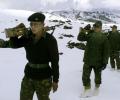
Special Representatives of China and India have held 19 rounds of talks to resolve the boundary issue.
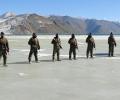
Last week, China's national legislature adopted the new law on the protection and exploitation of the land border areas, which could have bearing on Beijing's border dispute with India.

India and China have held their first diplomatic talks since withdrawing troops from two face-off points in eastern Ladakh, reflecting on the lessons learned from the border row to prevent future incidents. The two sides agreed to maintain peace and tranquillity in border areas, prepare for the next meeting of Special Representatives on the boundary question, and highlighted the importance of regular exchanges and contacts at diplomatic and military levels. The talks come after the completion of the disengagement process from the last two friction points, following an agreement finalized in October 2022.

India and China on Thursday vowed to redouble efforts to resolve the remaining issues in eastern Ladakh at the earliest and 'stabilise and rebuild' ties even as External Affairs Minister S Jaishankar conveyed to his Chinese counterpart Wang Yi during a meeting that the Line of Actual Control (LAC) must be respected.

Gen Pande also said that Indian troops are adequately deployed along the Line of Actual Control to deal with any situation and that guidance has been given to them to "remain firm and resolute" in their tasks.


The Indian Army has commenced a verification patrolling at Depsang, the second friction point in eastern Ladakh, the government said on Saturday.

The defence minister said Prime Minister Narendra Modi and Chinese President Xi Jinping had an informal summit meeting at Wuhan where it was decided that peace and tranquillity will be maintained at the border.

At a media briefing in Beijing, Chinese Foreign Ministry spokesman Wang Wenbin said the two sides have maintained smooth communication on border-related issues through diplomatic and military channels.

The people familiar with the development said the new bridge is being built in an area that is over 20 km from the Line of Actual Control (LAC).

The Indian army is planning to put back a surveillance camera in the Chumar area along the Line of Actual Control to keep an eye on the movement of the Chinese troops, which had reportedly taken away a similar device last month.

In his conversation with Prime Minister Narendra Modi, President Xi Jinping stressed that improving China-India relations serves common interests and is conducive to peace and stability of the region and the world.

In their first structured bilateral talks in nearly five years, Prime Minister Narendra Modi and Chinese President Xi Jinping Wednesday agreed that India and China can have a 'peaceful and stable' relationship by displaying maturity and mutual respect and endorsed the pact on the resolution of the dragging eastern Ladakh border row.
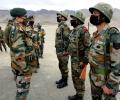
India, China have agreed to hold another round of talks soon.

On May 5, around 250 Indian and Chinese army personnel clashed with iron rods, sticks, and even resorted to stone-pelting in Pangong Tso lake area in Eastern Ladakh.
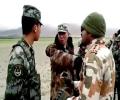
India has significantly enhanced military infrastructure, surveillance and combat capabilities along the nearly 3,500 km-long Line of Actual Control (LAC) with China since the deadly clashes in Galwan valley in 2020, sources in the defence establishment said Wednesday on the eve of the third anniversary of the hostilities.
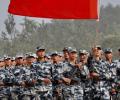
The Chinese action followed 'India's recent, illegal construction of defence facilities across the border into Chinese territory in the Galwan Valley region', a write-up in the state-run Global Times tabloid said, quoting unnamed military sources.

In the meeting, Doval conveyed to Wang that peace and tranquillity in border areas and respect for the Line of Actual Control are essential for return of normalcy in bilateral ties, according to the ministry of external affairs.
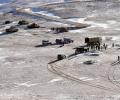
The Indian and Chinese troops are locked in an over three-year confrontation in certain friction points in eastern Ladakh even as the two sides completed disengagement from several areas following extensive diplomatic and military talks.

India and China have implemented a pact on patrolling in Depsang and Demchok along the Line of Actual Control (LAC) in eastern Ladakh, as per agreed modalities and timelines. The agreement was reached on October 21 and includes provisions for disengagement and patrolling in the last two friction points in the region. The pact has been effected and implemented as agreed, with both sides resuming patrolling activities and grazing, where applicable, as per longstanding practice before the friction began. The terms of the disengagement agreements reached prior to the latest pact continue to hold in relevant areas in eastern Ladakh. The agreement applies mutually to both sides and is without prejudice to India's positions on the LAC or boundary lines. India and China are each carrying out one round of patrolling in Depsang and Demchok, but they have maintained their deployment of troops along the LAC. The focus now is on de-escalation of the overall situation. The agreement was endorsed by Prime Minister Narendra Modi and Chinese President Xi Jinping in a meeting in Kazan, Russia, signaling attempts to normalize ties.
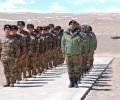
The Working Mechanism for Consultation and Coordination on India-China Border Affairs (WMCC) was established in 2012 as an institutional mechanism for consultation and coordination for the maintenance of peace and tranquillity in the border areas.

India's External Affairs Minister S Jaishankar has stated that peace and tranquility in border areas are essential for the development of bilateral ties with China. He said India will be discussing de-escalation and effective management of activities in border areas with China in the coming days, following the completion of troop disengagement in eastern Ladakh. Jaishankar emphasized the importance of respecting the Line of Actual Control (LAC), maintaining the status quo, and adhering to past agreements. The disengagement phase allows for discussions on other aspects of bilateral engagement, with national security interests prioritized. However, the statement sparked an uproar in the Rajya Sabha, with Opposition MPs demanding clarifications that were disallowed by the Chair, leading to a walkout.
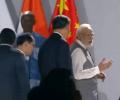
Prime Minister Narendra Modi conveyed to Chinese President Xi Jinping India's concerns on the "unresolved" issues along Line of Actual Control (LAC) in eastern Ladakh during a conversation on the sidelines of the BRICS summit, Foreign Secretary Vinay Mohan Kwatra said on Thursday.
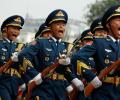
Since the June 15 clash, the PLA has inducted large numbers of troops, armoured vehicles and artillery along the LAC, from Depsang and Galwan in northern Ladakh to Hot Springs, Pangong Tso, and Chushul in central Ladakh, to Demchok and Chumar in southern Ladakh.
The MEA said it was the Chinese side that recently undertakook activities hindering India's normal patrols in the areas.

Following the disengagement, both sides will soon start the coordinated patrolling in their respective areas, sources added.
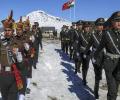
The 16th round of military talks between India and China on the lingering border standoff in eastern Ladakh will be held on July 17 on the Indian side of the Line of Actual Control (LAC) in the region, official sources said on Friday.
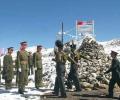
The comments came in the backdrop of the continuing standoff between the militaries of India and China at the LAC.
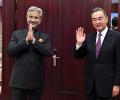
If the visit takes place, it will be the first trip by a senior Chinese leader to India after the eastern Ladakh standoff between the two countries began in May 2020.
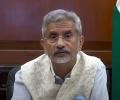
"Discussions are on; what is going on is something confidential between us and the Chinese," he said when the moderator at the Bloomberg India Economic Forum pressed the minister to give a clear status of the border situation.
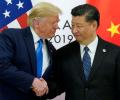
"We are capable of properly resolving the issues between us through dialogue and consultation. We do not need the intervention of the third party", he said.

Ministry of External Affairs (MEA) spokesperson Arindam Bagchi said China continues to deploy a large number of troops and armaments in the border areas and it was in response to Chinese actions that the Indian armed forces had to make appropriate counter deployments.
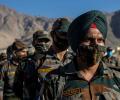
A day after the nearly 13-hour meeting, the two sides in a joint statement on Saturday reaffirmed that such a resolution would help restore peace and tranquillity along the Line of Actual Control (LAC) in eastern Ladakh and facilitate progress in bilateral relations.
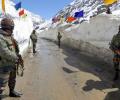
China on Thursday said Chinese and Indian troops have taken "effective measures" to disengage at the Galwan Valley and other areas along the Line of Actual Control in eastern Ladakh and the situation is "stable and improving," days after the two sides agreed on an expeditious withdrawal of soldiers from all the standoff points.

Indian graziers were stopped by Chinese troops from moving ahead near the Line of Actual Control (LAC) in the Demchok region of eastern Ladakh over a week ago, people familiar with the development said on Monday.
The two armies had mutually decided not to resort to use firearms during face-offs in sync with provisions of two agreements on border management.
